
Desafíos, oportunidades y amenazas en la protección y conservación de tortugas marinas en Guerrero, México
Palabras clave:
conservación, proporción de sexo, éxito reproductivo, calidad de crías, estrategias de mitigaciónResumen
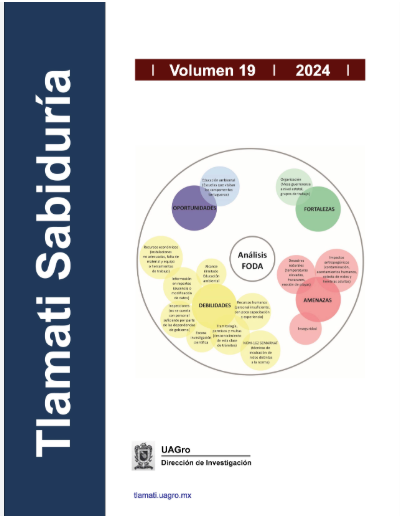
La protección y conservación de tortugas marinas en el estado de Guerrero cuenta con más 50 años de experiencia. Sin embargo, hasta la fecha ningún estudio ha descrito la protección y conservación a nivel estatal. El objetivo de la presente investigación fue identificar los desafíos, las oportunidades y las amenazas futuras respecto a la protección y conservación de tortugas marinas en Guerrero, México. Se realizaron 24 entrevistas con preguntas abiertas (28) y cerradas (7) a personal de dependencias de gobierno, actores de una comunidad y a responsables técnicos de campamentos tortugueros, durante el año 2020 en el estado de Guerrero. Las preguntas se clasificaron en cuatro categorías: 1) problemas relacionados con la conservación de tortugas marinas en Guerrero, 2) biología de la reproducción, 3) ecología de poblaciones y 4) estrategias de conservación. Mediante un análisis FODA (Fortalezas, Oportunidades, Debilidades y Amenazas), se registraron las fortalezas en la organización entre campamentos tortugueros y dependencias de gobierno; respecto a las oportunidades, se registró la educación ambiental. Sin embargo, esta misma muestra debilidad debido a que tiene poco alcance; se registraron debilidades en la falta de educación ambiental, poca investigación, falta de recursos humanos y económicos, ausencia de información en los reportes, desacuerdos con la NOM-162 SEMARNAT, inseguridad, falta de inspecciones, tramitología, permisos y multas; finalmente, dentro de las amenazas se encontraron desastres naturales, impactos antropogénicos e inseguridad. Esta investigación demostró que existen más debilidades y amenazas que fortalezas y oportunidades en la conservación de tortugas marinas a nivel estatal. Estos resultados proveen información fundamental para tomar medidas al respecto, para mejorar la protección y conservación de tortugas marinas en el estado de Guerrero
Descargas
Referencias
Ávila-Aguilar, A. (2015). Selección de sitios de anidación de Lepidochelys olivacea (Testudines: Cheloniidae) en el Pacífico Sur de Costa Rica. Revista de Biología Tropical, 63, 375-381.
Balladares, C., Dubois, E. (2014). Saqueo y depredación de nidadas de tortugas marinas, durante las temporadas 2003 a 2012, en seis playas del Golfo de Paria, Venezuela. Cuadernos de Investigación UNED, 6,139-243.
Booth, D.T., Astill, K. (2001). Temperature variation within and between nests of the green sea turtle, Chelonia mydas (Chelonia: Cheloniidae) on Heron Island, Great Barrier Reef. Australian Journal of Zoology, 49, 71-84.
Booth, D.T., Freeman, C. (2006). Sand and nest temperatures and an estimate of hatchling sex ratio from the Heron Island green turtle (Chelonia mydas) rookery, Southern Great Barrier Reef. Coral reefs, 25, 629-633.
Booth, D.T., Feeney, R., Shibata, Y. (2013). Nest and maternal origin can influence morphology and locomotor performance of hatchling green turtles (Chelonia mydas) incubated in field nests. Marine Biology, 160, 127-137.
Booth, D.T. (2017). Influence of incubation temperature on sea turtle hatchling quality. Integrative zoology, 12, 352-360.
Burger, J., Gochfeld, M. (2014). Avian predation on olive ridley (Lepidochelys olivacea) sea turtle eggs and hatchlings: avian opportunities, turtle avoidance, and human protection. Copeia, 2014, 109-122.
Castro-Mondragón, H, Flores-Garza, R, García- Ibáñez, S., Flores-Rodríguez, P. (2012). Evaluación de la extracción furtiva de huevos de Lepidochelys olivacea en la zona de patrullaje del centro de protección y
conservación de la tortuga marina (UAEM-UAGRO). Tlamati, 4, 40-46.
De Oliveira-Braga, H., Schiavetti, A. (2013). Attitudes and local ecological knowledge of experts
fishermen in relation to conservation and bycatch of sea turtles (Reptilia: testudines),
Southern Bahia, Brazil. Journal of ethnobiology and ethnomedicine, 9, 15.
de Vasconcellos-Pegas, F., Coghlan, A., Stronza, A., Rocha, V. (2013). For love or for money? Investigating the impact of an ecotourism programme on local residents' assigned values towards sea turtles. Journal of Ecotourism, 12, 90-106.
Donlan, C.J., Wingfield, D.K., Crowder, L.B., Wilcox, C. (2010). Using expert opinion surveys to rank threats to endangered species: a case study with sea turtles. Conservation Biology, 24, 1586-1595.
Erb, V., Lolavar, A., Wyneken, J. (2018). The role of sand moisture in shaping loggerhead sea turtle (Caretta caretta) neonate growth in southeast Florida. Chelonian Conservation and Biology, 17, 245-251.
Esteban, N., Laloë, J-O., Kiggen, F.S.P.L., Ubels, S.M., Becking, L.E., Meesters, E.H., Berkel, J., Hays, G.C., Christianen, M.J.A. (2018). Optimism for mitigation of climate warming impacts for sea turtles through nest shading and relocation. Scientific Reports 8, 17625.
Gaona-Pineda, O., Barragán-Rocha, A. (2016). Las tortugas marinas en México: logros y perspectivas para su conservación. Soluciones ambientales ITZEN, A.C./Comisión Nacional de Áreas Naturales Protegidas, México, 228p. 2-20
Hamann, M., Godfrey, M., Seminoff, J., Arthur, K., Barata, P., Bjorndal, K.A., Bolten, A., Broderick, A., Campbell, L., Carreras, C., Casale, P., Chaloupka, M., Chan, S., Coyne, M., Crowder, L., Diez, C., Dutton, P., Epperly, S., FitzSimmons, N., Formia, A., Girondot, M., Hays, G., Cheng, I., Kaska, Y., Lewison, R., Mortimer, J., Nichols, W., Reina, R., Shanker, K., Spotila, J., Tomás, J., Wallace, B., Thierry M., Zbinden, N., Godley, B. (2010). Global research priorities for sea turtles: informing management and conservation in the 21st century. Endangered Species Research, 11, 245-269. https://doi.org/10.3354/esr00279
Hawkes, L.A., Broderick, A.C., Godfrey, M.H., Godley, B.J. (2007). Investigating the potential impacts of climate change on a marine turtle
population. Global Change Biology, 13, 923-932.
Hewavisenthi, S., Parmenter, C. (2002). Incubation environment and nest success of the flatback turtle (Natator depressus) from a natural nesting beach. Copeia, 2002, 302-312.
Hill, J.E., Paladino, F.V., Spotila, J.R., Santidrián-Tomillo, P. (2015). Shading and watering as a tool to mitigate the impacts of climate change in sea turtle nests. PLoS One, 10, e0129528.e
Instituto Nacional de Ecología (1990). Manual de técnicas de manejo y conservación para la operación de campamentos tortugueros. Secretaria de Desarrollo Urbano y Ecología, México.
Detalles de: Manual de técnicas de manejo y conservación para la operación de campamentos tortugueros / Secretaría de Pesca. › Catálogo en línea Koha (diputados.gob.mx)
Ischer, T., Ireland, K., Booth, D.T. (2009). Locomotion performance of green turtle hatchlings from the Heron Island Rookery, Great Barrier Reef. Marine Biology, 156, 1399- 1409.
Jourdan, J., Fuentes, M. (2015). Effectiveness of strategies at reducing sand temperature to mitigate potential impacts from changes in environmental temperature on sea turtle reproductive output. Mitigation and adaptation strategies for global change, 20, 121-133.
Katselidis, K.A., Schofield, G., Stamou, G., Dimopoulos, P., Pantis, J.D. (2012). Females first? Past, present and future variability in offspring sex ratio at a temperate sea turtle breeding area. Animal Conservation, 15, 508-518.
Kobayashi, S., Wada, M., Fujimoto, R., Kumazawa, Y., Arai, K., Watanabe, G., Saito, T. (2017). The effects of nest incubation temperature on embryos and hatchlings of the loggerhead sea turtle: Implications of sex difference for survival rates during early life stages. Journal of Experimental Marine Biology and Ecology, 486, 274-281.
Kobayashi, S., Aokura, N., Fujimoto, R., Mori, K., Kumazawa, Y., Ando, Y., Matsuda, T., Nitto, H., Arai, K., Watanabe, G., Saito, T. (2018). Incubation and water temperatures influence the performances of loggerhead sea turtle hatchlings during
the dispersal phase. Scientific reports, 8, 1-9.
LeBlanc, A.M., Wibbels, T., Shaver, D., Walker, J.S. (2012). Temperature-dependent sex determination in
the Kemp’s ridley sea turtle: effects of incubation temperatures on sex ratios. Endangered Species Research, 19, 123-128.
Lolavar, A., Wyneken, J. (2015). Effect of rainfall on loggerhead turtle nest temperatures,
sand temperatures and hatchling sex. Endangered Species Research, 28, 235-247.
Lutcavage, M., Plotkin, P., Witherington, B., Lutz, P. (1997). Human Impacts on Sea Turtle Survival.
In P.L. Lutz, J.A. Musick, J. Wyneken (eds). The biology of sea turtles. CRC Press, 387p.
Malaver, M. (2008). Evaluación de actitudes frente al uso de las tortugas marinas en
playa Gandoca. Revista de la Facultad de Medicina Veterinaria y de Zootecnia, 55, 29-38.
Mancini, A., Koch, V. (2009). Sea turtle consumption and black market trade in
Baja California Sur, Mexico. Endangered Species Research, 7, 1-10.
Mancini, A., Senko, J., Borquez-Reyes, R., Guzman-Póo, J., Seminoff, J.A., Koch, V. (2011).
To poach or not to poach an endangered species: elucidating the economic and social drivers behind
illegal sea turtle hunting in Baja California Sur, Mexico. Human Ecology, 39, 743-756.
Márquez-Millán, R. (1996). Las tortugas marinas y nuestro tiempo. Fondo de la Cultura Económica, México, 200p.
Martínez, M., Moreno-Casasola, P., Espejel, I., Orocio, O., Mata, D., Revelo, N., González, J. (2014).
Diagnóstico general de las dunas costeras de México. Méx. SEMARNAT. CONAFOR, 350p.
DiagnosticodelasdunascosterasdeMexico_Cap_ Restauracion.pdf
Maulany, R.I., Booth, D.T., Baxter, G.S. (2012). The effect of incubation temperature on hatchling quality in the olive ridley turtle, Lepidochelys olivacea, from Alas Purwo National Park, East Java, Indonesia:
implications for hatchery management. Mar Biol. 159, 2651-2661.
Méndez-Rodríguez, L., Álvarez-Castañeda, S. (2016). Predation on turtle nests in the southwestern coast of the Baja California Peninsula. Revista Mexicana de Biodiversidad, 87, 483-488.
Mickelson, L., Downie, J. (2010). Influence of incubation temperature on morphology and locomotion performance of Leatherback (Dermochelys coriacea) hatchlings. Canadian Journal of Zoology, 88, 359-368.
National Research Council (1990). Decline of the sea turtles, causes and prevention. Whashington, D. C., USA. National academy Press.
Front Matter Decline of the Sea Turtles: Causes and Prevention The National Academies Press
Olivier de la Esperanza, A., Arenas-Martínez, A., Tuz, M.T., Pérez-Collazos, E. (2017). Are anthropogenic factors affecting nesting habitat of sea turtles? The case of Kanzul beach, Riviera Maya-Tulum (Mexico). Journal of Coastal Conservation, 21, 85-93.
Patiño‐Martínez, J., Marco, A., Quiñones, L., Hawkes, L. (2012). A potential tool to mitigate the impacts of climate change to the Caribbean leatherback sea turtle. Glob Chang Biol. 18, 401-411.
Patiño-Martínez, J., Marco, A., Quiñones, L., Hawkes, L.A. (2014). The potential future influence of sea level rise on leatherback turtle nests. Journal of Experimental Marine Biology and Ecology, 461, 116-123.
Peñaflores, S., Nataren, E. (1989). Resultados de acciones de protección para las tortugas marinas en el estado de Oaxaca. En Secretaría de Pesca. Tortugas (golfina, laud, lora, blanca, cahuama y carey). Instituto Nacional de Ecología, 57-67.
Poloczanska, E.S., Limpus, C.J., Hays, G.C. (2009). Vulnerability of marine turtles to climate change. In D.W. Sims (Ed.). Advances in marine biology. Burlington, Academic press, Elsevier Ltd., 151-211.
Rivas, M.L., Spínola, M., Arrieta, H., Faife‐ Cabrera, M. (2018). Effect of extreme climatic
events resulting in prolonged precipitation on the reproductive output of sea turtles. Animal Conservation, 21, 387-395.
Robinson, J.G. (2011). Ethical pluralism, pragmatism, and sustainability in conservation practice. Biological Conservation, 144, 958-965.
Santidrián-Tomillo, P., Saba, V.S., Piedra, R., Paladino, F.V, Spotila, J.R. (2008). Effects of illegal harvest of eggs on the population decline of leatherback turtles in Las Baulas Marine National Park, Costa Rica. Conservation Biology, 22, 1216-1224.
Sarti-Martínez, L., Barragán, A.R, García-Muñoz, D., García, N., Huerta, P., Vargas, F. (2007). Conservation and biology of the leatherback turtle in the Mexican Pacific. Chelonian Conservation and Biology, 6, 70-78.
SEMARNAT (2022). Programa Nacional de Protección, Conservación, Investigación y Manejo de Tortugas Marinas. Secretaría de Medio Ambiente y Recursos Naturales. Comisión Nacional de +Areas Naturales Protegidas.
Programa-Nacional-De-Conservacion-De- Tortugas-Marinas.pdf (conanp.gob.mx)
Seminoff, J.A., Shanker, K. (2008). Marine turtles and IUCN Red Listing: a review of the process, the pitfalls, and novel assessment approaches. Journal of Experimental Marine Biology and Ecology, 356, 52-68.
Senko, S., Nichols, W.J., Ross, J.P., Willcox, A. (2009). To Eat or not to Eat an Endangered Species: Views of Local Residents and Physicians on the Safety of Sea Turtle Consumption in Northwestern Mexico. EcoHealth, 6, 584-595.
Senko, J.F., Burgher, K.M., Mancha‐Cisneros, M.M., Godley, B.J., Kinan‐Kelly, I., Fox, T., Humber, F., Koch, V., Smith, A.T., Wallace,
B.P. (2022). Global patterns of illegal marine turtle exploitation. Global change biology, 28, 6509-6523.
Sim, E., Booth, D.T, Limpus, C. (2015). Incubation temperature, morphology and performance in loggerhead (Caretta caretta) turtle hatchlings from Mon Repos, Queensland, Australia. Biology Open, 4, 685-692.
Staines, M., Booth, D.T, Limpus, C. (2019). Microclimatic effects on the incubation success, hatchling morphology and locomotor performance of marine turtles. Acta Oecologica, 97, 49-56.
Tisdell, C., Wilson, C. (2002). Ecotourism for the survival of sea turtles and other wildlife. Biodiversity and Conservation, 11, 1521-1538.
Tisdell, C., Wilson, C. (2005). Do open-cycle hatcheries relying on tourism conserve sea turtles? Sri lankan developments and economic– ecological considerations. Environmental management, 35, 441-452.
Tiwari, M. (2002). An evaluation of the perceived effectiveness of international instruments for sea turtle conservation. Journal of International Wildlife Law and Policy, 5, 145-156.
Valadez-González, C., Silva-Bátiz, F., Hernández-Vázquez, S. (2012). Proporción sexual en crías de la Tortuga marina Lepidochelys olivacea, producida en corral de incubación en la playa de anidación La Gloria, Jalisco, México. Boletín del Centro de Investigaciones Biológicas, 34, 305-456
Van de Merwe, J., Ibrahim, K., Whittier, J. (2006). Effects of nest depth, shading, and metabolic heating on nest temperatures in sea turtle hatcheries. Chelonian Conservation and Biology, 5, 210-215.
Wallace, J. (2003). Biology and conservation of sea turtles in Baja California, Mexico. PhD thesis, The University of Arizona.
Biology and conservation of sea turtles in Baja California, Mexico (arizona.edu)
Wilson, C., Tisdell, C. (2001). Sea turtles as a non-consumptive tourism resource
especially in Australia. Tourism management, 22, 279-288.
Wilson, C., Tisdell, C. (2003). Conservation and economic benefits of wildlife-based marine
tourism: sea turtles and whales as case studies. Human Dimensions of Wildlife, 8, 49-58
Publicado
Declaración de disponibilidad de datos
No
Número
Sección
Categorías
Licencia
Derechos de autor 2026 José Luis Sandoval, Adriana Sandoval, Rafael Flores, Ricardo Herrera-Navarrete, Himmer Castro, Francisco Rubén Castañeda (Autor/a)

Esta obra está bajo una licencia internacional Creative Commons Atribución-NoComercial-SinDerivadas 4.0.
Declaración de acceso abierto conforme a la definición de DOAJ
“Acceso Abierto” es un término general que abarca tanto el Acceso Abierto Gratis como el Libre. Para DOAJ, el acceso abierto es sólo cuando el contenido digital está disponible gratuitamente en línea y los derechos de usuario y los términos de derechos de autor están definidos.
Todos los textos publicados por Tlamati –sin excepción– se distribuyen amparados bajo la licencia Creative Commons 4.0 No comercial
Los autores/as pueden realizar otros acuerdos contractuales independientes y adicionales para la distribución no exclusiva de la versión del artículo publicado en Tlamati (por ejemplo, incluirlo en un repositorio institucional o publicarlo en un libro) siempre que indiquen claramente que el trabajo se publicó por primera vez en Tlamati.
Este es un resumen legible por humanos de (y no un sustituto) de la licencia
Terminos de la licencia https://creativecommons.org/licenses/by-nc-sa/4.0/deed.es
Usted es libre de:
- Compartir — copiar y redistribuir el material en cualquier medio o formato
- Adaptar — remezclar, transformar y construir a partir del material
- La licenciante no puede revocar estas libertades en tanto usted siga los términos de la licencia
Bajo los siguientes términos:
- Atribución — Usted debe dar crédito de manera adecuada, brindar un enlace a la licencia, e indicar si se han realizado cambios. Puede hacerlo en cualquier forma razonable, pero no de forma tal que sugiera que usted o su uso tienen el apoyo de la licenciante.
- NoComercial — Usted no puede hacer uso del material con propósitos comerciales.
- CompartirIgual — Si remezcla, transforma o crea a partir del material, debe distribuir su contribución bajo la lamisma licencia del original.
- No hay restricciones adicionales — No puede aplicar términos legales ni medidas tecnológicas que restrinjan legalmente a otras a hacer cualquier uso permitido por la licencia.
Avisos:
No tiene que cumplir con la licencia para elementos del materiale en el dominio público o cuando su uso esté permitido por una excepción o limitación aplicable.
No se dan garantías. La licencia podría no darle todos los permisos que necesita para el uso que tenga previsto. Por ejemplo, otros derechos como publicidad, privacidad, o derechos morales pueden limitar la forma en que utilice el material.