Vol. 22 No. 35 (2025): Life sciences: avifauna in Guerrero
Introduction
This volume of Tlamati Sabiduría brings together a collection of research studies that, from the perspective of the life sciences, rigorously and thoroughly address various aspects of the natural wealth and socio-environmental challenges of the state of Guerrero. This issue, focused on avifauna and other topics in regional biology, seeks to contribute to the knowledge and conservation of Guerrero's ecosystems, while also highlighting the scientific work generated by local and national academia.
The publication opens with an analysis of sea surface temperature and chlorophyll-a concentration off the coast of Guerrero, a fundamental study for understanding oceanographic dynamics and their impact on marine productivity during El Niño and La Niña events. This work provides crucial tools for the management of fisheries resources and the understanding of the effects of climate change in the region.
In a complementary vein, traditional knowledge and bean cultivation practices on the Guerrero coast are explored. This research documents local knowledge and current threats facing this crop, highlighting the importance of integrating peasant and Indigenous perspectives into strategies for agrobiodiversity conservation and food sovereignty.
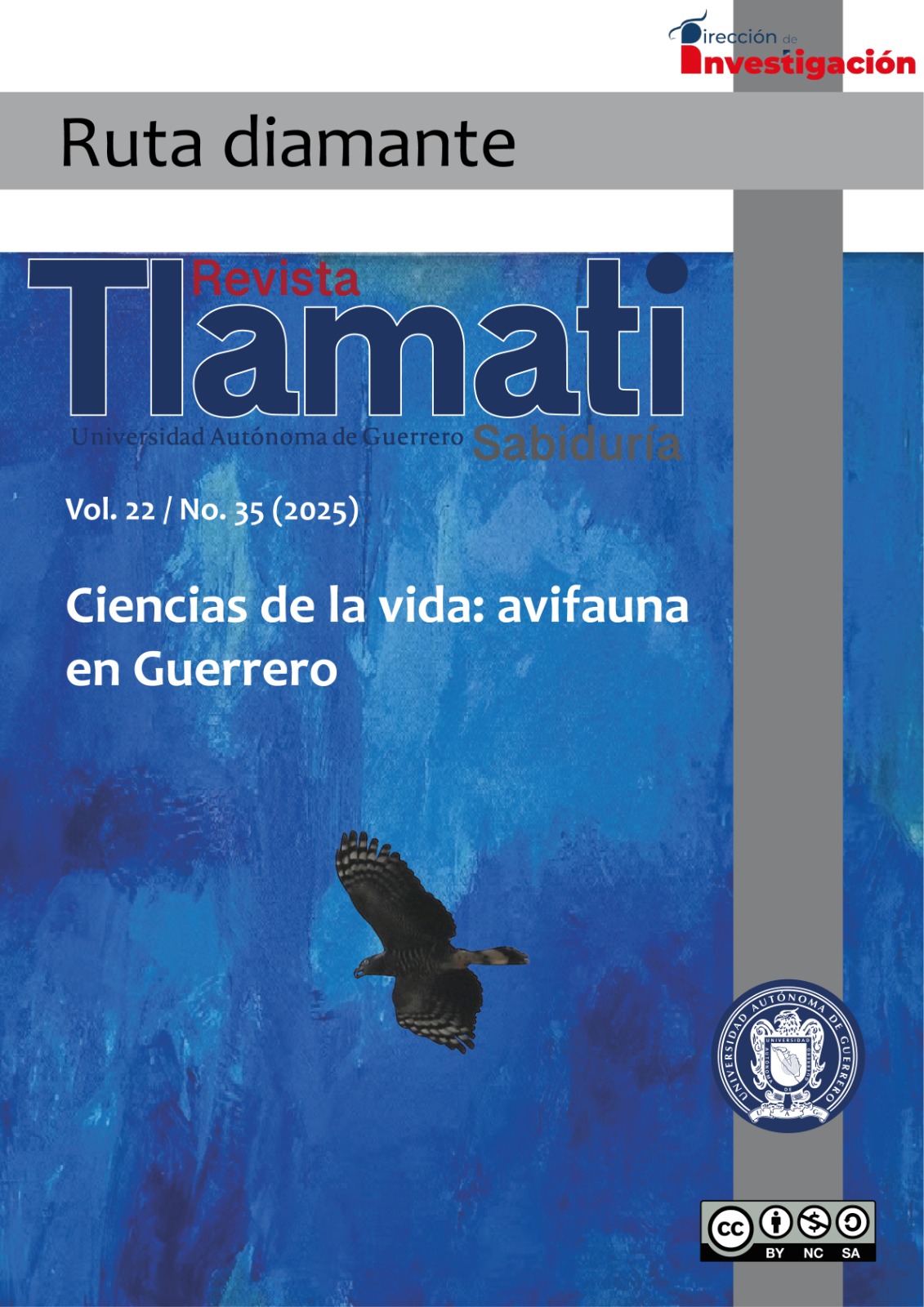
One of the central articles in this issue focuses on the expansion of the known distribution range of the Hook-billed Hawk (Chondrohierax uncinatus) in the state. This ornithological finding, of great value to biogeography and species conservation, underscores the need to continue wildlife monitoring in still largely unexplored regions.
Finally, the volume includes an extensive dossier on the "International Forum on Inclusive Education at the Upper Secondary Level," which fosters a necessary dialogue between the natural and social sciences. Taken together, the works presented here reflect the commitment of the Autonomous University of Guerrero to high-level research and the dissemination of knowledge, fundamental aspects for understanding, valuing, and protecting our biodiversity and our community.
Published:
2025-12-12