
Archives
-
Fishing in the Pacific
Vol. 23 No. 36 (2026)Volume 23, Number 36 of Tlamati Sabiduría (2026) brings together seven research projects that address environmental, social, and technological issues from multidisciplinary perspectives, with an emphasis on the state of Guerrero and the Mexican Pacific coast.
In the fisheries sector, the swordfish population in the Eastern Pacific Ocean (1950-2020) is evaluated, identifying signs of overfishing based on surplus production models and the Kobe diagram, which places the fishery in critical condition during the period 2018-2020. Additionally, cultural eutrophication is analyzed at a global level, revealing a concentration of studies in North America and Europe, with limited representation from Latin America, where research on lakes predominates and agriculture and wastewater discharges are identified as the main causes.
In the area of risk management, the damage caused by Hurricane John (2024) in neighborhoods of Chilpancingo is documented, proposing an intervention model that integrates structural and non-structural measures to strengthen community resilience. An academic article complements this line of inquiry by analyzing, fifty years after the tragedy of Hurricane Liza (1976), the relationship between inequality, discrimination, and disasters, highlighting the recent decision by the Baja California Sur Congress to honor the victims as an act of historical justice.
From a technological innovation perspective, an interactive web tool is presented that, using artificial intelligence, recommends parental control applications to prevent cybercrimes involving children, with a 93% acceptance rate among the users evaluated. Finally, research on cultural eutrophication is included, mapping the evolution of scientific knowledge between 2000 and 2023, identifying geographic and ecosystemic gaps in underrepresented regions such as Latin America.
Overall, the volume highlights the importance of integrative approaches that articulate science, technology, risk management, and social justice to address contemporary environmental and social challenges, particularly in highly vulnerable contexts such as the state of Guerrero.
-
Life sciences: avifauna in Guerrero
Vol. 22 No. 35 (2025)Introduction
This volume of Tlamati Sabiduría brings together a collection of research studies that, from the perspective of the life sciences, rigorously and thoroughly address various aspects of the natural wealth and socio-environmental challenges of the state of Guerrero. This issue, focused on avifauna and other topics in regional biology, seeks to contribute to the knowledge and conservation of Guerrero's ecosystems, while also highlighting the scientific work generated by local and national academia.
The publication opens with an analysis of sea surface temperature and chlorophyll-a concentration off the coast of Guerrero, a fundamental study for understanding oceanographic dynamics and their impact on marine productivity during El Niño and La Niña events. This work provides crucial tools for the management of fisheries resources and the understanding of the effects of climate change in the region.
In a complementary vein, traditional knowledge and bean cultivation practices on the Guerrero coast are explored. This research documents local knowledge and current threats facing this crop, highlighting the importance of integrating peasant and Indigenous perspectives into strategies for agrobiodiversity conservation and food sovereignty.
One of the central articles in this issue focuses on the expansion of the known distribution range of the Hook-billed Hawk (Chondrohierax uncinatus) in the state. This ornithological finding, of great value to biogeography and species conservation, underscores the need to continue wildlife monitoring in still largely unexplored regions.
Finally, the volume includes an extensive dossier on the "International Forum on Inclusive Education at the Upper Secondary Level," which fosters a necessary dialogue between the natural and social sciences. Taken together, the works presented here reflect the commitment of the Autonomous University of Guerrero to high-level research and the dissemination of knowledge, fundamental aspects for understanding, valuing, and protecting our biodiversity and our community.
-
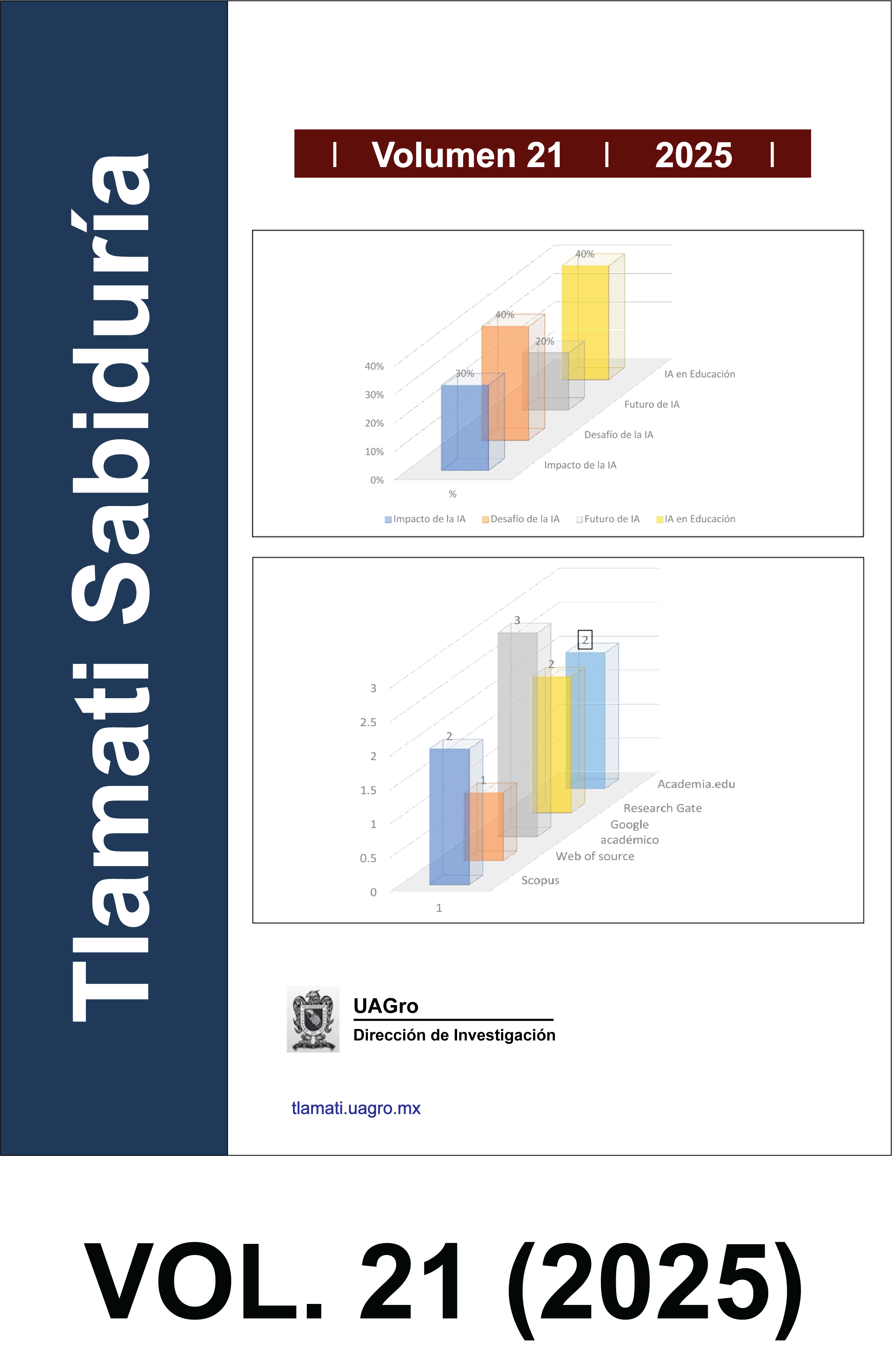
The quantitative importance in regional studies
Vol. 21 No. 34 (2025)Editorial
Volume 21, number 34 of the journal Tlamati Sabiduría brings together research focused on the analysis of contemporary environmental, social, and territorial problems, approached from interdisciplinary perspectives that contribute to understanding current challenges in sustainability and natural resource management. The works included in this issue reflect the academic commitment to generating relevant, contextualized scientific knowledge with social impact, particularly in regions facing environmental transformations resulting from urban growth, pressure on ecosystems, and the intensive use of natural resources.
Among the topics addressed are the conservation of urban trees, the valuation of ecosystem services, and the water problems associated with the exploitation of community aquifers. This research demonstrates the importance of incorporating participatory methodologies and citizen science approaches to strengthen information gathering processes and promote greater environmental awareness among the population. It also emphasizes the role of local communities in developing solutions aimed at the sustainable management of the environment and the preservation of natural resources.
The articles presented offer analyses grounded in fieldwork, technological tools, and qualitative and quantitative approaches that allow for an understanding of complex phenomena related to urban biodiversity, water availability, and the effects of climate change. Likewise, this volume highlights the need to strengthen public policies and environmental management strategies from a comprehensive and participatory perspective.
With this edition, Tlamati Sabiduría reaffirms its commitment to disseminating research that contributes to the academic and social debate on sustainable development, encouraging critical reflection and the search for alternatives to address current and future environmental challenges.
-
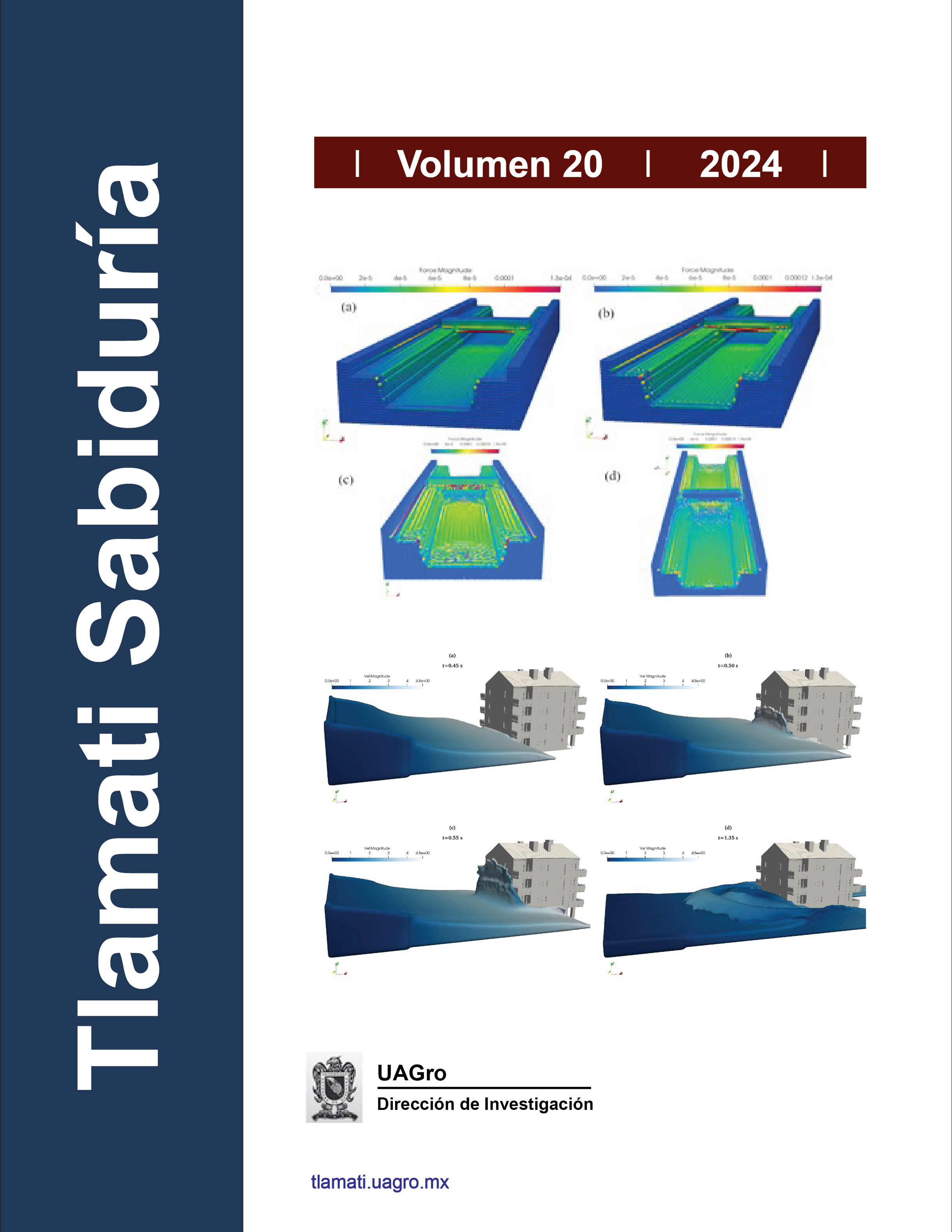
Multidisciplinary Research for Academic and Social Development
Vol. 20 No. 33 (2024)Volume 20, number 33 of the journal Tlamati Sabiduría brings together a collection of research that reflects the thematic and methodological diversity of contemporary scientific production in Mexico and Latin America. Through articles focused on education, agricultural sciences, applied mathematics, and statistical analysis, this edition demonstrates the academic community's commitment to generating knowledge useful for addressing social, educational, productive, and scientific problems from interdisciplinary and innovative perspectives.
Among the topics covered are the use of technological tools to strengthen English language learning in university students, the impact of agronomic practices such as pruning and fertilization on guava production, and methodological proposals based on Bayesian inference applied to randomized ordinal regression statistical models. These works show how scientific research contributes to improving educational processes, increasing agricultural productivity, and developing more robust analytical models for handling complex data.
Furthermore, the articles integrate quantitative and qualitative methodologies that allow for understanding phenomena from different dimensions. The use of questionnaires, interviews, comparative analyses, statistical tests, and computer simulations demonstrates the importance of combining methodological approaches to obtain robust and relevant results. Likewise, the incorporation of digital technologies and contemporary analytical tools confirms the growing need to adapt research to the challenges of a society marked by innovation and technological transformation.
Overall, this volume constitutes a significant contribution for researchers, professors, students, and professionals interested in the advancement of scientific and humanistic knowledge. The journal thus reaffirms its purpose of disseminating original research that promotes critical analysis, academic exchange, and the search for solutions to current problems from a comprehensive and multidisciplinary perspective.
-
Science, health and sustainability: research from Guerrero for the 21st century
Vol. 19 No. 32 (2024)This 19th volume of Tlamati Sabiduría brings together a collection of research projects that reflect the diversity and academic commitment of the Autonomous University of Guerrero and its collaborating institutions. The works compiled here address current issues in natural sciences, health, mathematics education, organizational communication, and environmental conservation, offering significant contributions to the understanding and resolution of regional, national, and global challenges.
In the field of chemical and biological sciences, studies are presented on the antiradical activity and encapsulation of extracts from medicinal plants used in traditional medicine in Guerrero, highlighting the potential of species such as Kalanchoe daigremontiana, Eucalyptus globulus, and Tecoma stans as promising sources of natural antioxidants for application in the pharmaceutical, food, and cosmetic industries. Additionally, the differential incidence of mistletoe in native and introduced plants in urban and peri-urban areas of central Guerrero is analyzed, generating key information for the design of control and management strategies for these parasitic plants.
In the field of health and epidemiology, a Bayesian mixture mathematical model is presented to describe COVID-19 outbreaks in the state of Guerrero. This tool allows for the identification of peaks in infections, hospitalizations, and deaths during the pandemic, contributing to public health decision-making.
In the field of mathematics education, a methodological proposal is offered to strengthen the comprehension phase of mathematical problems, addressing one of the main difficulties faced by students and teachers in the teaching-learning process.
In the field of organizational communication, findings are presented on the management of internal communication and its relationship with organizational culture at the Mexican Chamber of the Construction Industry, Guerrero Delegation. Strategies are proposed to improve teamwork, productivity, and employee integration. Finally, in the area of environmental conservation, highly relevant topics are addressed, such as the prevalence of the fungus Batrachochytrium dendrobatidis in amphibians of the cloud forests of southern Mexico, the challenges and opportunities in the protection of sea turtles in Guerrero, and social attitudes related to the consumption of sea turtle eggs in the town of Llano Real.
We thank the authors, reviewers, and editors for their invaluable contribution in making this volume possible. We trust that readers will find in these pages tools for reflection, research, and action in their respective fields of study.