
Archives
-
Approaches to teaching and learning proposals
Vol. 22 No. 35 (2025)This volume brings together a collection of research and critical reflections articulated around the fundamental axis of contemporary educational transformation: the teaching-learning dyad. In a global scenario characterized by complexity and technological acceleration, approaches to teaching demand a profound revision of traditional practices. This compendium explores how the work of teachers has shifted from the mere transmission of information to strategic mediation, centered on the development of critical thinking skills and student autonomy.
Through various articles, learning proposals are presented that integrate active methodologies, the ethical use of digital tools, and attention to diversity in the classroom. The volume is organized under a dialectical premise: it is not possible to innovate in teaching without a deep understanding of the cognitive and socio-emotional processes of the learner. The authors analyze everything from classroom experiences at basic levels to complex models of higher education, offering a holistic vision that encompasses the didactic, pedagogical, and evaluative dimensions.
In conclusion, this volume not only systematizes current pedagogical theories but also proposes practical, context-specific solutions to the challenges of the 21st century. Ultimately, it seeks to foster an academic dialogue that transcends theory and translates into a significant improvement in the quality of education. This text is essential reading for researchers, teachers, and administrators interested in redefining the horizons of shared knowledge.
Keywords: Teaching, Learning proposals, Educational innovation, Didactics, Active methodologies, Teacher transformation.
-
The quantitative importance in regional studies
Vol. 21 No. 34 (2025)Editorial
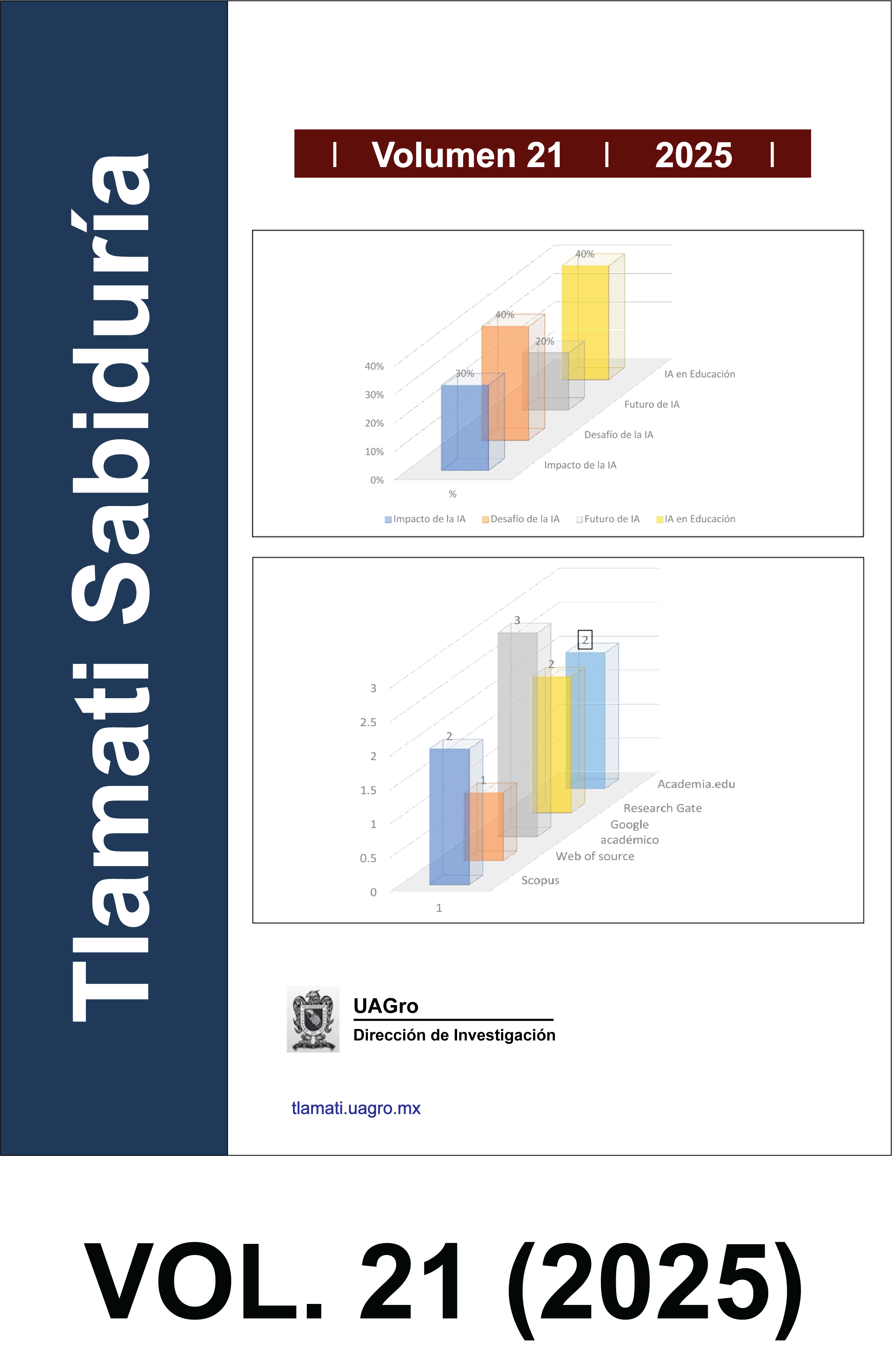
Volume 21, number 34 of the journal Tlamati Sabiduría brings together research focused on the analysis of contemporary environmental, social, and territorial problems, approached from interdisciplinary perspectives that contribute to understanding current challenges in sustainability and natural resource management. The works included in this issue reflect the academic commitment to generating relevant, contextualized scientific knowledge with social impact, particularly in regions facing environmental transformations resulting from urban growth, pressure on ecosystems, and the intensive use of natural resources.
Among the topics addressed are the conservation of urban trees, the valuation of ecosystem services, and the water problems associated with the exploitation of community aquifers. This research demonstrates the importance of incorporating participatory methodologies and citizen science approaches to strengthen information gathering processes and promote greater environmental awareness among the population. It also emphasizes the role of local communities in developing solutions aimed at the sustainable management of the environment and the preservation of natural resources.
The articles presented offer analyses grounded in fieldwork, technological tools, and qualitative and quantitative approaches that allow for an understanding of complex phenomena related to urban biodiversity, water availability, and the effects of climate change. Likewise, this volume highlights the need to strengthen public policies and environmental management strategies from a comprehensive and participatory perspective.
With this edition, Tlamati Sabiduría reaffirms its commitment to disseminating research that contributes to the academic and social debate on sustainable development, encouraging critical reflection and the search for alternatives to address current and future environmental challenges.
-
Multidisciplinary Research for Academic and Social Development
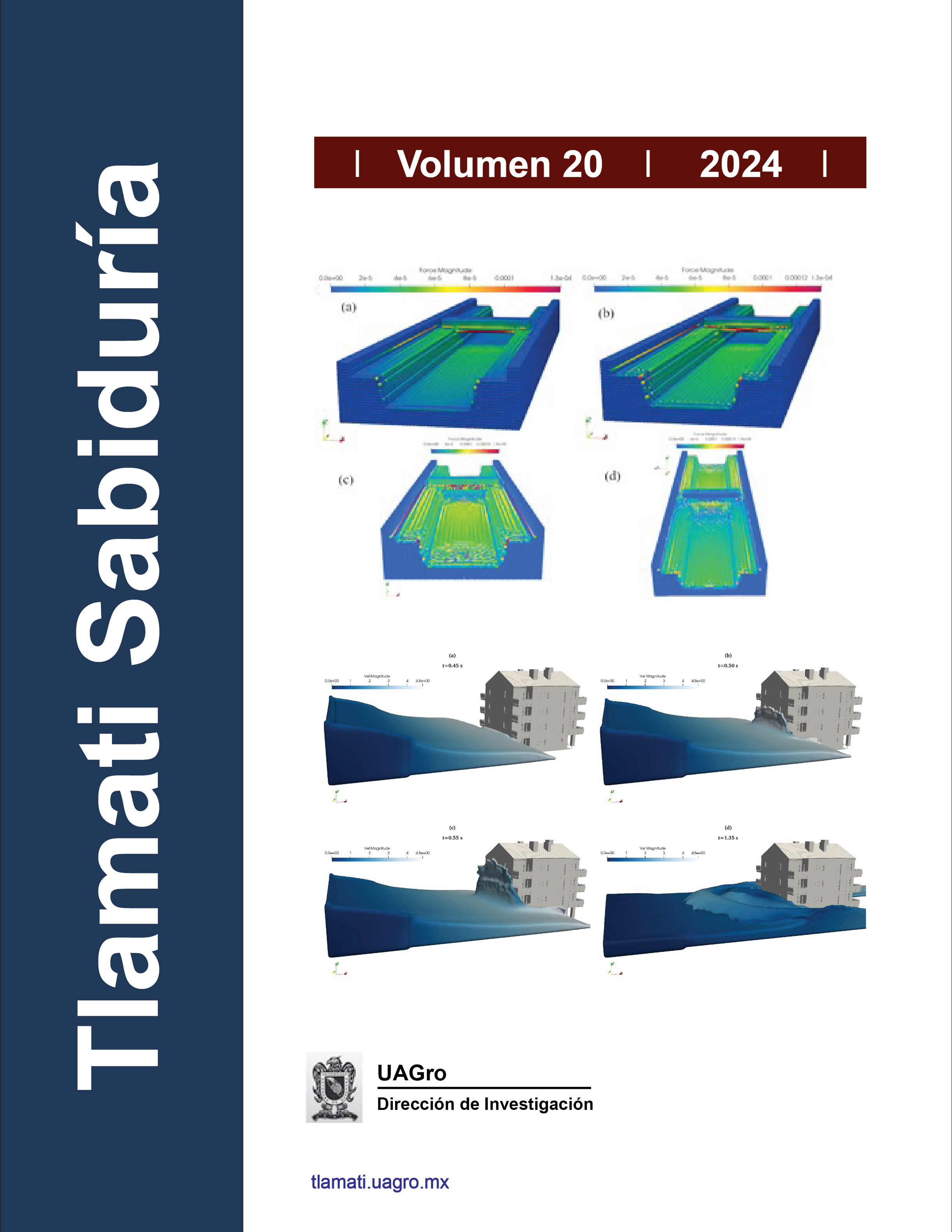
Vol. 20 No. 33 (2024)Volume 20, number 33 of the journal Tlamati Sabiduría brings together a collection of research that reflects the thematic and methodological diversity of contemporary scientific production in Mexico and Latin America. Through articles focused on education, agricultural sciences, applied mathematics, and statistical analysis, this edition demonstrates the academic community's commitment to generating knowledge useful for addressing social, educational, productive, and scientific problems from interdisciplinary and innovative perspectives.
Among the topics covered are the use of technological tools to strengthen English language learning in university students, the impact of agronomic practices such as pruning and fertilization on guava production, and methodological proposals based on Bayesian inference applied to randomized ordinal regression statistical models. These works show how scientific research contributes to improving educational processes, increasing agricultural productivity, and developing more robust analytical models for handling complex data.
Furthermore, the articles integrate quantitative and qualitative methodologies that allow for understanding phenomena from different dimensions. The use of questionnaires, interviews, comparative analyses, statistical tests, and computer simulations demonstrates the importance of combining methodological approaches to obtain robust and relevant results. Likewise, the incorporation of digital technologies and contemporary analytical tools confirms the growing need to adapt research to the challenges of a society marked by innovation and technological transformation.
Overall, this volume constitutes a significant contribution for researchers, professors, students, and professionals interested in the advancement of scientific and humanistic knowledge. The journal thus reaffirms its purpose of disseminating original research that promotes critical analysis, academic exchange, and the search for solutions to current problems from a comprehensive and multidisciplinary perspective.
-
Approaches to the environment and population
Vol. 6 No. 10 (2015)Volume 6 is accompanied by four issues that address specific problems in the state of Guerrero, ranging from environmental and population issues. It brings together a collection of research that reflects the diversity and depth of academic work at the Autonomous University of Guerrero and other collaborating institutions. The works compiled here address current problems in biological sciences, health, education, tourism, the environment, social sciences, and technology, offering significant contributions to the understanding and solution of regional and national challenges.
In the biomedical field, studies are presented on the expression of the REST protein as a potential biomarker in lung cancer, as well as analyses of genetic polymorphisms associated with gestational weight gain and neonatal anthropometry. This work opens new perspectives for early diagnosis and preventive medicine.
The environmental sciences section includes research on the effect of mercury on bean germination and the development of expert systems for environmental quality assessment, highlighting the urgent need to develop sustainable technologies and pollution biomarkers.
From the perspectives of social sciences and education, this issue addresses highly relevant topics such as civic political culture in the coastal regions of Guerrero, the role of women in agricultural systems, poverty and female headship, and teachers' social representations in relation to the New Mexican School model. An analysis of tourism in Acapulco, focusing on visitor expectations, satisfaction, and loyalty, and the specification of an e-entrepreneurship model, complement this issue.
We thank the authors, reviewers, and guest editors for their invaluable contributions. We trust that readers will find in these pages tools for reflection and action in their respective fields of study.
-
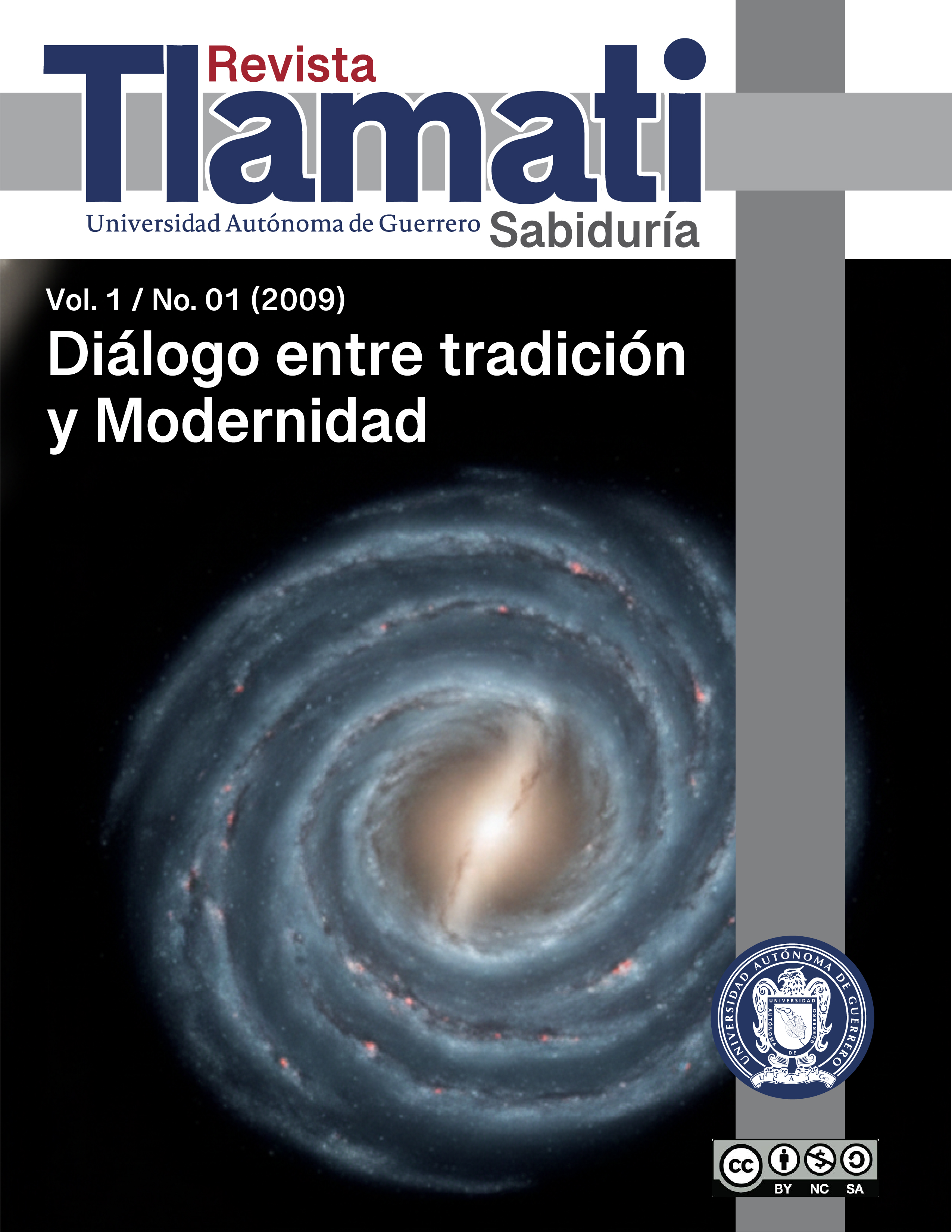
Diálogo entre tradición y modernidad
Vol. 1 No. 1 (2009)El primer volumen de la revista Tlamati. Sabiduría (Universidad
Autónoma de Guerrero, abril-julio 2009) marca el inicio de un
proyecto editorial que busca consolidar la investigación y la difusión
académica en el estado de Guerrero. La publicación se presenta
como un espacio interdisciplinario que integra ciencia, tecnología y
humanidades, con el propósito de fortalecer la identidad
universitaria y proyectar el conocimiento hacia la sociedad.
En su presentación, se subraya que el nacimiento de la revista es
un símbolo de orgullo institucional y un compromiso con la reforma
universitaria, orientada a dar un “rostro y corazón nuevo” a la
academia. Los artículos incluidos abordan temas diversos, desde
reflexiones filosóficas sobre la sabiduría y el conocimiento, hasta
estudios científicos aplicados al contexto regional. Se destacan
investigaciones sobre flora y fauna de Guerrero, análisis de
problemáticas sociales y culturales, así como propuestas para el
desarrollo tecnológico y educativo.
El volumen también enfatiza la importancia de rescatar el saber
tradicional y vincularlo con la investigación moderna, creando un
puente entre la herencia cultural y los retos del nuevo milenio. La
revista se concibe como un foro abierto para docentes,
investigadores y estudiantes, donde se fomenta la crítica, el diálogo
y la construcción colectiva del conocimiento.